Disinflation vs Deflation: What’s the Difference?
Disinflation means inflation is slowing while prices still rise. Deflation means the general price level falls. Here is how the two differ, what causes each, how they can affect the economy and markets, and what to check when inflation is falling.

A pizza that cost $10 last year costs $10.30 now. Still going up. Just slower than before. The headline says inflation is cooling, and some people hear "prices are falling." They aren't.
What Is Disinflation?
Disinflation means inflation is slowing down. Prices rise, just slower. Last year the pizza jumped 6%. This year, 3%. Still more expensive. Just less so. That's disinflation. The pizza keeps getting pricier, only the pace eases. Picture disinflation as a foot off the gas, not a hand on the brake. The car still rolls.
Open a demo account and watch markets react when price data surprises.
Try Demo AccountRelease days feel different from reading about them.
Data releases are loud. A number drops, charts jump before you finish your coffee, and then everyone argues about what it meant. You can watch all of that on a demo account, with virtual funds and no stress, and learn which markets react first and which ones just shrug.
Next CPI day, try demo trading and see which markets move first.
What Is Deflation?
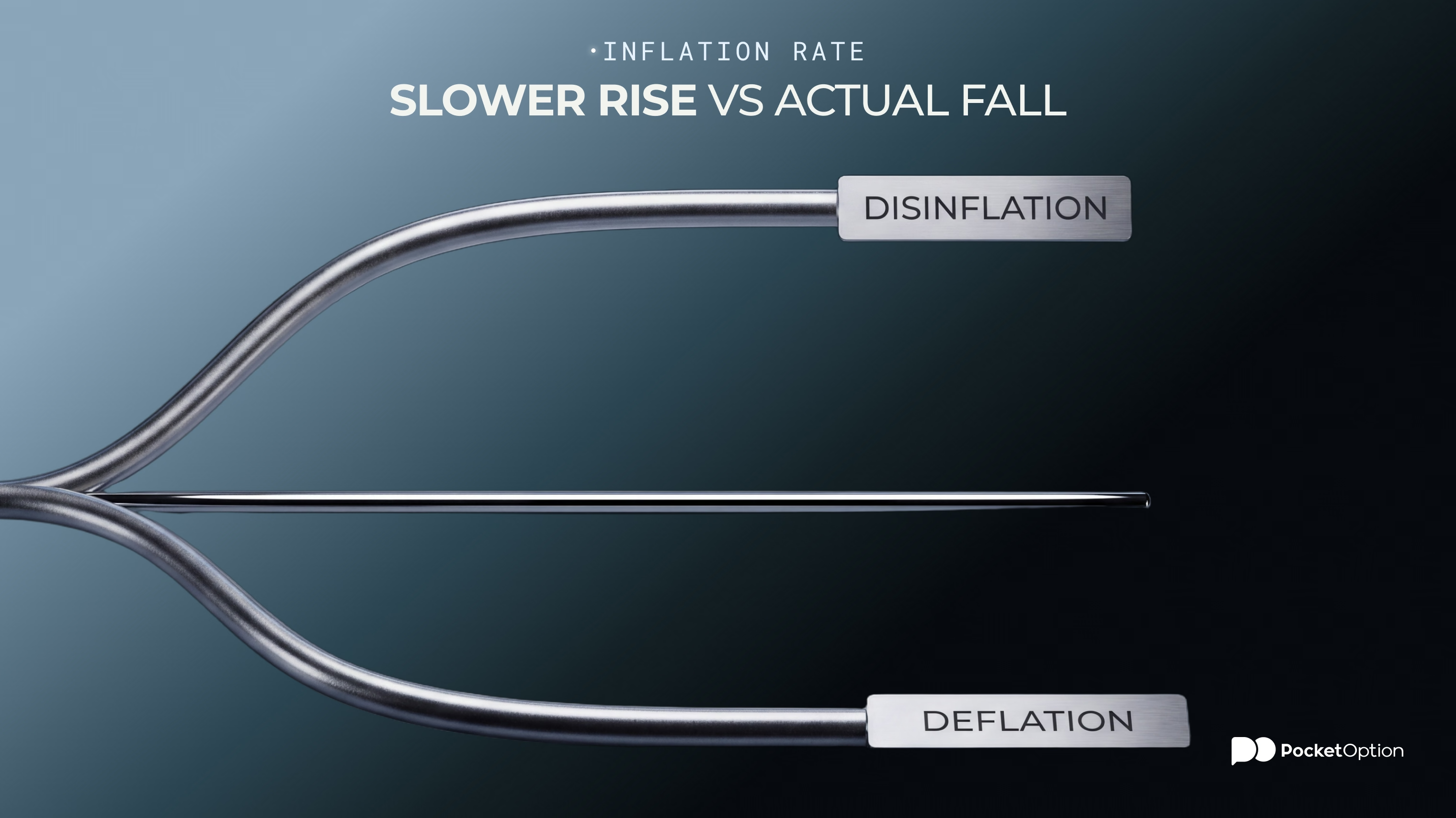
Deflation is a different animal. The general price level falls. Not the pizza alone. Rent drops. Shoes drop. Fuel drops. The inflation rate goes negative. Disinflation vs deflation? One slows the climb. The other reverses it. Sounds like a bargain. Except debts stay the same size, and people wait to buy because tomorrow's price is lower. That waiting is the problem.
Open a price chart and see for yourself. The pocket option tutorial covers the setup.
Japan is the textbook case: years of mild, stubborn falling prices after its 1990s bubble burst. The damage comes below. For now, disinflation vs deflation is slow rise versus actual fall.
Disinflation vs Deflation: The Key Difference
People keep asking what is disinflation compared with deflation. Easiest test: look at the sign of the inflation rate. Plus sign, prices still rising, that's the first one. Minus sign, prices falling, the second. So what is disinflation, in one line? Inflation that's still positive, just smaller.
Feature | Slowing inflation | Deflation |
|---|---|---|
Inflation rate | Positive but lower | Negative |
Direction of price level | Still rising, more slowly | Falling |
Simple example | 6% down to 3% | Prices 1% below last year |
Typical economic context | Cooling after a price surge | Weak demand, credit squeeze |
Effect on purchasing power | Erodes more slowly | Rises if incomes hold |
Main risk | Growth stalling | Heavier debt, delayed spending |
Rising slower, or falling. That's the table in a nutshell.
What Causes Disinflation and Deflation?
Start with the cooling. Say the central bank hikes rates. Mortgages cost more, shoppers pull back, and sellers stop raising prices so fast. Or freight rates fall as supply chains heal. Or oil slides and heating bills ease. Or prices just settle after a shock. Cooling shows up in slowdowns and in steady growth, so slower price growth alone doesn't mean recession.
Now falling prices. Those need heavier causes. Demand collapses. Credit dries up and everyone pays down debt at once. Or a big positive supply shock drags prices down across the board. New technology can make one product cheaper (phones, anyone?), but one cheaper item isn't a falling price level.
Short version: a slower climb on one side, an actual drop in the general price level on the other.
How Disinflation and Deflation Affect the Economy and Markets
Cooling in a growing economy? Usually fine. Pressure eases, nobody panics. Cooling while the economy slows, or recession fears build? Different mood. The label won't tell you which.
Persistent deflation hits harder. Picture a business whose prices keep sliding. Revenue shrinks, wages get squeezed, hiring stops. Loans stay the same size, so debt weighs more in real terms. Households wait to spend, firms wait to invest, and the downturn can feed itself. Markets feel all this through rate expectations, bond yields, equities and currencies. A brief dip in prices isn't automatically a spiral, though, and no mechanical rule tells you where any market goes next.
What Traders Should Check When Inflation Is Falling
How do you tell healthy cooling from a slide toward negative territory? Not from one print. What to check when inflation is falling:
Is inflation still positive or already negative
Breadth of price declines
Core vs headline trend
Wage growth
Consumer demand
Labor-market conditions
Inflation expectations
Central-bank response
Falling inflation alone won't tell you what bonds, currencies, stocks or indices do next. It's context. Nothing more.
Risk Disclaimer: Trading involves significant risk of capital loss. This article is for educational purposes only and does not constitute financial advice. Always conduct independent research and consider your risk tolerance before making any trading decisions.
See more:Glossary