What Is the RBI Repo Rate? Meaning and How It Affects Indian Markets
The RBI repo rate is the price the central bank charges banks for short-term cash. Here is how the policy rate works, how it can pass into borrowing costs, the rupee, bank shares and the wider market, and what traders watch around each decision.

10 a.m. in Mumbai. The Governor starts reading a statement. Screens go quiet. Bank stocks twitch. The rupee jumps, or doesn't. All because of one number most people can't define. That number is the repo rate.
What Is the RBI Repo Rate?
Quick answer to what is RBI repo rate: the price the Reserve Bank of India charges banks for short-term cash. Banks hand over government securities as collateral. That's the deal. The Monetary Policy Committee, the MPC, sets the price. Since the whole system borrows against it, it works as the main dial for monetary conditions in India.
Two limits before we go further. It isn't the rate on your home loan. And no single decision tells you where the rupee or stocks will go. Ask what is RBI repo rate really measuring. The honest answer: the cost of the first link in a long chain.
Open a demo account and watch the rupee and Indian assets react on live charts.
Try Demo AccountPolicy days make more sense when you watch them live.
Try a drill. Open a demo account. Pick what reacts. A rupee pair. An Indian index. A bank stock. Wherever your platform lists them. On the next policy day, watch from 9:45 a.m. Note the first reaction. Then note the one an hour later. After three decisions you'll know more than any textbook. You'll see what is RBI repo rate doing to markets.
Spend one policy day on demo trading before you form an opinion.
How the RBI Repo Rate Works
People type what is repo rate RBI into a search bar. They expect a one-line answer. The mechanism has more links. The central bank changes the repo rate. Short-term funding for banks gets cheaper or costlier. Over time that can feed into lending rates, deposit rates and credit conditions. Can. Not will. And not instantly.
Want to follow the rupee live? The pocket option tutorial shows how to open your first chart.
Speed varies. It depends on liquidity in the banking system. On bank balance sheets. On competition between lenders. On how banks fund themselves. Since 2019, new floating-rate retail loans must follow an external benchmark. Many lenders pick the repo rate. That shortens the lag for those loans. Reset dates and lender spreads still differ. Ask what is repo rate RBI doing in practice. The answer changes by borrower.
How RBI Repo Rate Changes Affect Borrowing Costs
A hike can push borrowing costs up. A cut can ease them. Only if the chain holds. Picture three borrowers. A homebuyer with a floating-rate loan. A small firm with a working-capital line. A shopper on consumer credit. Each feels the move differently. Each feels it later than the headline. Lenders don't pass changes along automatically. Or by the same amount.
How the RBI Repo Rate Can Affect the Indian Rupee
The rupee channel runs through interest-rate gaps. Higher policy rates, other things equal, can make rupee assets look better to foreign investors. Lower ones can take some of that support away. Markets often trade the expectation, not the move.
And everything else keeps pushing. The US dollar. Oil prices. Risk appetite. Trade flows. Global rates. A hike doesn't mean a stronger rupee. A cut doesn't mean a weaker one. Anyone selling that shortcut is selling a story.
How the RBI Repo Rate Can Affect Banks and Indian Stocks
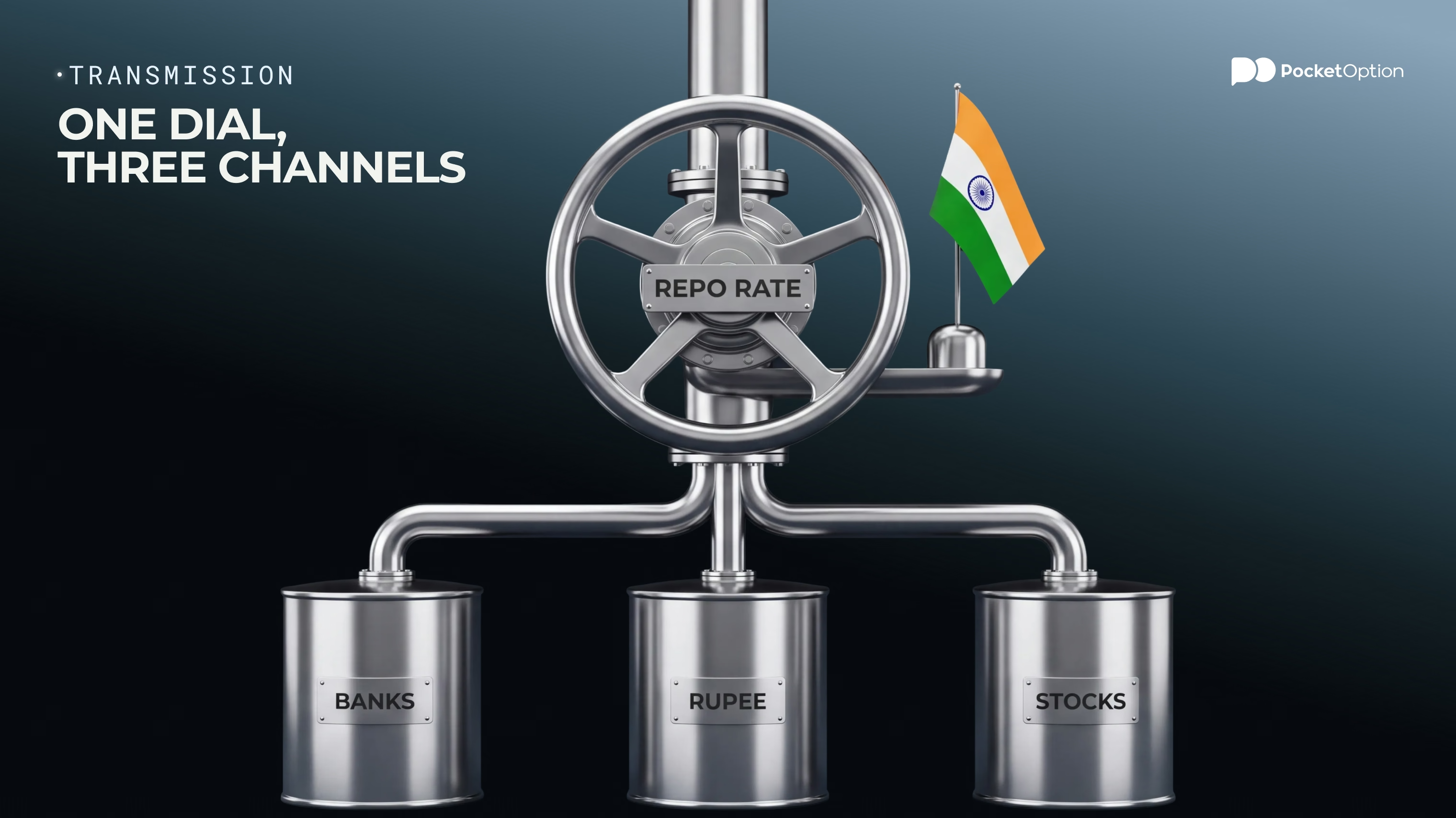
Banks are the tricky case. Higher rates can fatten the yield on loans. They can also make funding pricier, slow lending and hurt loan quality. Which force wins depends on the bank. For stocks the channels are borrowing costs, earnings expectations and discount rates.
Market Area | Possible Effect of Higher Repo Rate | Possible Effect of Lower Repo Rate |
|---|---|---|
Bank funding and lending conditions | Costlier funding, firmer lending rates | Cheaper funding, softer lending rates |
Bank margins | Two forces: loan yields up, funding costs up | Two forces: funding costs down, loan yields down |
Credit demand | Softer as loans cost more | Firmer as loans cost less |
Rate-sensitive sectors | Property, autos and durables under pressure | Some relief for property, autos and durables |
Broader equity valuations | Higher discount rates weigh on valuations | Lower discount rates lift valuations, if growth holds |
Read the column headers twice. Possible effects. Not promises.
What Traders Should Watch Around RBI Repo Rate Decisions
Don't stop at the headline. Walk through this list:
The rate decision itself
How the MPC voted, unanimous or split
The inflation outlook in the statement
The growth outlook
Comments on liquidity in the banking system
Guidance on future policy
The reaction in the rupee, bond yields and bank stocks
Rate unchanged, guidance changed? Markets can still move. Read the statement.
How Traders Can Interpret RBI Repo Rate Changes
One decision is one signal among many. Put it next to inflation, growth, global rates, the dollar and what markets expected. No entry rules. No exits. It never stands alone for the rupee or for stocks.
Risk Disclaimer: Trading involves significant risk of capital loss. This article is for educational purposes only and does not constitute financial advice. Always conduct independent research and consider your risk tolerance before making any trading decisions.
See more:GEO