
What Is a Corporate Bond? How Corporate Debt Works, How It's Rated and What It Means for Traders
One commonly says "the best corporate bonds" but very few people know what it means. It is a loan that investors make to the company. The principles that govern the behavior of the corporate bonds are also applicable to other instruments such as mutual funds and the company's shares. There are no "the best corporate bonds" in any sense of the word. The bond which is good enough to be held to maturity for the stable cash flow generation is not necessarily good for the investor who needs money in a year. The bond with the high coupon rate can be associated with high default risk. The most important thing is the time horizon and the default risk tolerance, not the ranking. This article will provide an overview of what is a corporate bond, explain the concept of the coupon and face value, what the rating scale means, how the corporate debt differs from government debt, why the issuer's stocks and bond funds are not the same as holding the bonds, and how bond yields and the central banks' decisions influence the assets available for trading on Pocket Option.

What Is a Corporate Bond
A corporate bond is a loan that a company raises from investors to run its business. The core of the concept is the fixed sum borrowed, a promise to return it at the particular date in the future and periodic interest payments, and this is the corporate bonds definition in its shortest form. In a simple language, it is a negotiable promissory note.
The company borrows money, pays interest in the form of coupon payments on the set dates and returns the principal amount at the maturity date. Companies borrow for the purposes of expansion, refinancing of debt and covering their daily expenses, and this is what are corporate bonds used for. A corporate bond is simply a loan that you can buy and sell before its maturity.
The bond's value depends on the strength of the borrower, prevailing interest rates and economic situation. In contrast to the stock, a bond does not imply the owner's share of the company. It creates the borrower/lender relation which forms the base of this article.
How Corporate Bonds Work: Coupons, Face Value and Maturity
Three parameters of a corporate bond remain the same through its life cycle: face value (usually $1,000), the annual interest rate (the coupon) and the maturity date. Usually, bonds make interest payments twice a year and the principal is returned at the maturity date. In a case of 5% interest rate on the $1,000 bond, the coupon payment is $50 per year or $25 twice per year.
The price of a bond on the market can be higher than its face value, which is called a premium, or lower than it, which is called a discount. There is an inverse relationship between the bond price and its yield: the increasing price means lower yield for the new bondholders.
The maturity matters more than it may seem. A bond that matures in two years is less affected by the changes of interest rates compared to the bond which matures in twenty years because the number of the payments to be revalued is smaller. Two bonds with the same issuer and the same credit risk can behave differently due to interest rates changes.
Corporate Bonds vs Government Bonds
Government and corporate bonds function similarly in the way of coupon payments and principal repayment. The only difference is who is the borrower and that makes bonds different in terms of risk level.
When government borrows in its currency, it becomes the safest borrower in this currency. A company, in turn, can lose customers, incur excessive debts or fail, that is why corporate bonds yield more compared to the similar government bonds of the same maturity.
This difference is a credit spread. It tells us a lot about risk:
Narrow spread: investors are calm about the ability of the issuer to repay the loan and credit situation in the market as well;
Widening spread: concern about either this issuer or economic situation rises;
Sharply widening the market-wide spread: a market-wide concern about the credit risk, which is often visible before the same concern appears in stock prices.
The information about the credit spread is useful for a trader even if he or she does not trade bonds directly. The market-wide credit spread shows us how the credit market estimates the risk and usually it becomes concerned before the stock market.
Credit Ratings: What Investment Grade Means
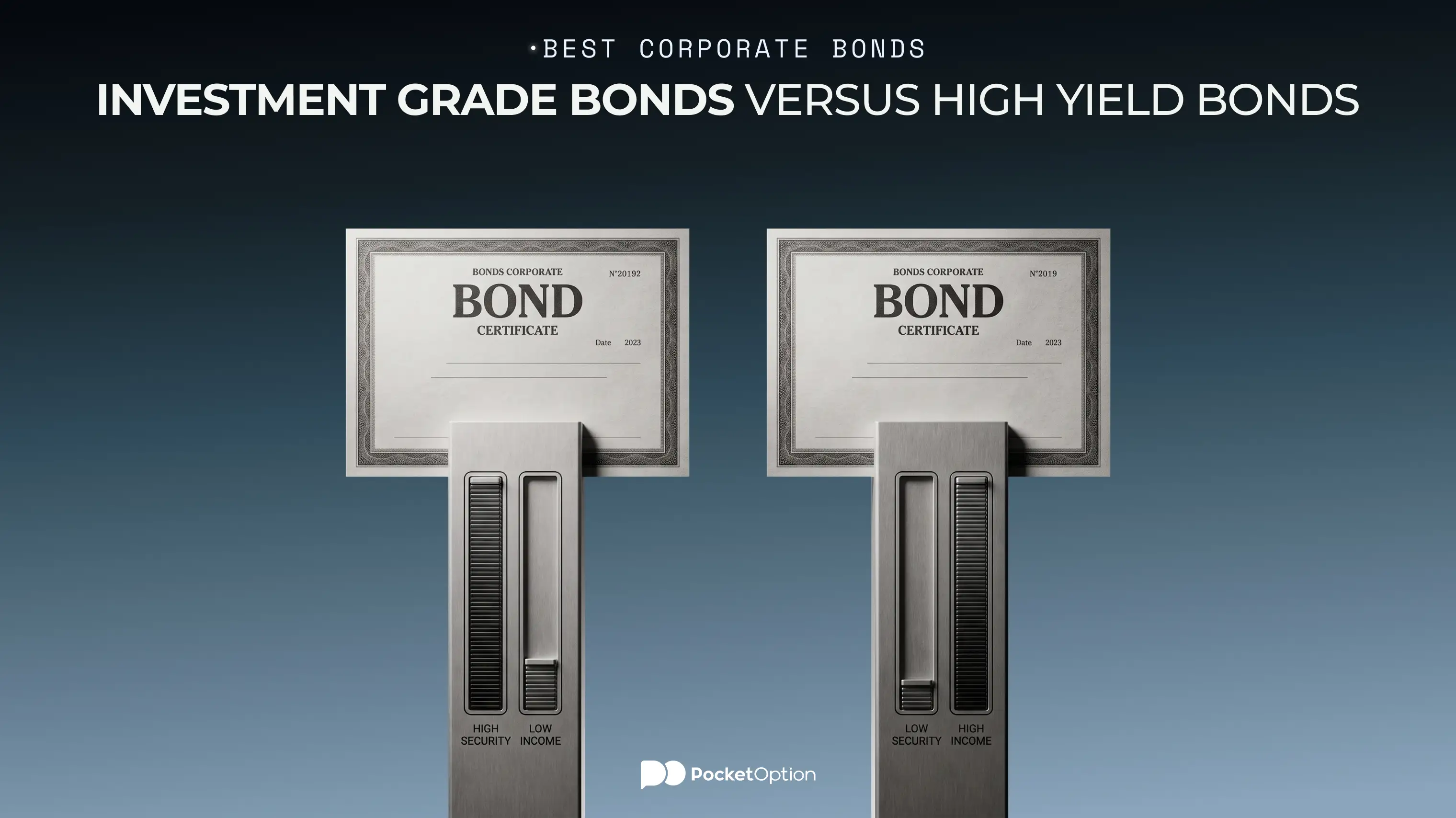
The bonds are rated according to the financial standing of the issuer. What are investment grade bonds? They are issued by financially stable companies and have the lowest risk of default. The rating of investment-grade bond is at least BBB- (by Standard & Poor's) or Baa3 (by Moody's).
The BBB- rating is the lowest investment-grade rating and one downgrade below this rating turns the issuer into the junk one. The coupon rate of an investment-grade bond is usually lower because of lower risk. The next step is a high-yield bond (junk bond) with higher coupon to cover the higher risk of default.
Risk-reward trade-off is one of the key principles of fixed income investments.
The ratings influence the market dynamics. In recessions, high yield bonds usually fall faster compared to the investment-grade bonds and their spread usually serves as a signal about the market sentiments. In a period of boom, high-yield bonds usually outperform the others.
How Ratings Are Assigned
The major rating agencies that assign the ratings include Standard & Poor's, Moody's and Fitch. All three use their own scales of ratings but they all follow the same logic: the higher the rating, the smaller the default probability. These agencies use financial statements, debt ratios, revenue stability, market position and sensitivity to the changes of the macroeconomic situation to assign the rating.
The transition of the investment-grade rating issuer to the junk rating is called fallen angel. Such downgrade triggers selling of the bond by the funds that are forbidden to hold junk debt. The rating upgrade lowers borrowing costs for the company and may be received positively by equity investors, but a rating change is only one factor among many and does not by itself decide where the share price goes.
The ratings rarely change unexpectedly. Watchlist or outlook changes precede the actual rating changes.
What Makes a Corporate Bond "Good": How Investors Evaluate Them
There are no universal "good" bonds. Everything depends on the goals of the investor. Therefore, the investor uses the set of criteria to estimate the suitability of the bond for his/her goals:
Yield to maturity: total return if held to maturity, taking into account price changes. Yield to maturity is usually estimated across bonds not the coupon rate;
Rating: credit quality estimated by the agencies;
Maturity and duration: capital is locked during this time and the sensitivity of the bond price to the changes of interest rates;
Liquidity: how easy it is to sell the bond before maturity;
Capital structure position: senior or subordinated debt.
Different investors consider these parameters differently. You may prefer to accept lower yield to get the higher credit rating and longer maturity. Other investors will prefer liquidity and shorter maturity even with the sacrifice of yield.
Risks of Corporate Bonds
Two forces influence the bond price and carry the risk:
Interest rates: when central bank raises its rates, new bonds will have higher coupon and old ones will decrease in price because of the lower coupon rate. If the interest rates fall, the price will rise;
Credit risk: poor performance, growing debts or bad economic situation increase the corporate bonds risk. This risk is estimated as credit spread, the difference between yield of a corporate bond and a government bond with the same maturity. The wider spread, the higher the concerns about the credit risk; the narrow spread, the less concerns.
The major risks:
Credit risk: the issuer may stop making coupon payments and/or returning principal;
Interest rate risk: prices of bonds fall when rates rise and if you sell before maturity;
Liquidity risk: the bonds of small issuers may be difficult to sell at a fair price;
Downgrade risk: the price falls after the rating downgrade despite the absence of default;
Inflation risk: fixed coupon becomes less valuable over time.
Pros and Cons of Investing in Bonds
The pros and cons of investing in bonds depend on what the investor wants from the position. The pros and cons of bonds look different for someone who needs steady income than for someone who wants growth, so it is worth knowing both sides before deciding.
Pros:
Reliable and regular income from coupon payments;
Fixed maturity date when the principal will be returned to the investor;
In case of bankruptcy, creditors including bondholders rank ahead of shareholders in their claim on the assets of the company.
Cons:
Income is limited to the coupon, investor cannot benefit from stock price increases;
The price of bonds falls if the interest rates rise, it is especially harmful if you sell the bond earlier;
The downgrade or default reduce your money.
Investing in corporate bonds requires the thorough research of the issuer. The upper limit of income is the coupon rate, while a default can cost a substantial part of the amount invested. That is why the diversification across issuers and ratings is popular.
Why Issuer Stocks and Bond ETFs Are Not a Substitute for Bonds
The shares and bond funds cannot substitute bonds despite the widespread usage of these instruments to get bond exposure.
The share is not a bond: you are the shareholder, you do not have a fixed maturity date and a contractual coupon payment, you do not have priority in case of bankruptcy. The bondholder has a fixed amount of money and the fixed maturity date.
The bond fund is not a bond: the fund has no maturity, whether it is an index product marketed as the best bond etf in its category or an actively managed fund. Positions in the portfolio are constantly replaced upon maturation, so there is no moment when the initial investment is returned.
This difference is important in the case of the rising rates. The individual bondholder can wait until the maturity and get the face value of his investment. The fund holder cannot.
How Bond Yields Affect Assets You Can Trade on Pocket Option
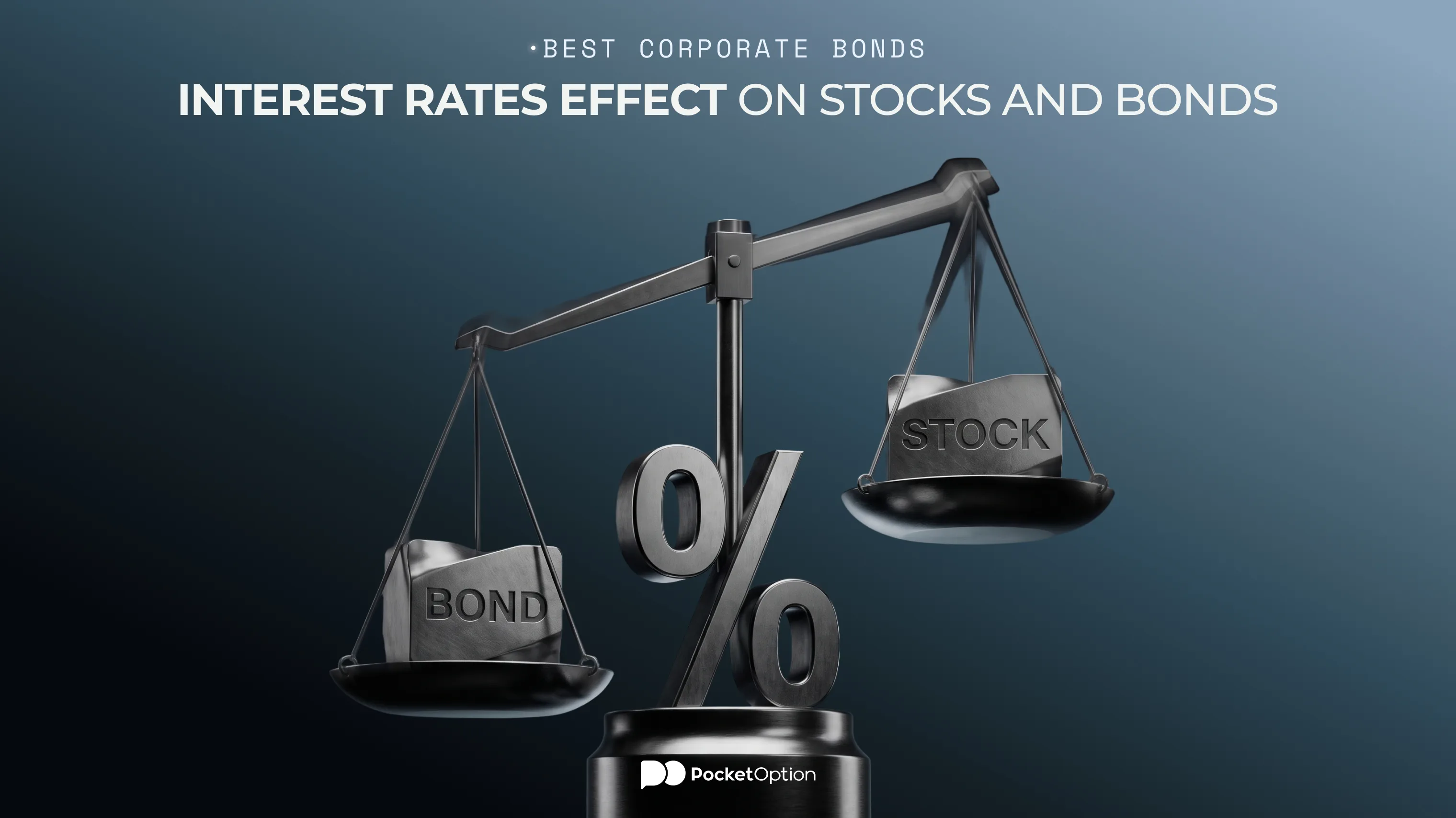
Direct corporate bonds are not currently among the instruments available on Pocket Option. The available assets are stocks, currencies, commodities, indices and cryptocurrencies. The same conditions influence both assets and bonds.
The decisions of the central bank are closely followed on both markets. In the case of interest rate rise, the borrowing costs rise and can squeeze the company's profit, which often weighs on the price of stocks. If interest rate falls, the pressure disappears. However, stocks and bonds do not move in parallel because of the earnings, expectations, sector's conditions, and market sentiment. The link between rates and bond prices is arithmetic, while the link between rates and share prices is not.
Working with credit-quality ideas
If you are using the ideas of credit quality, then some issuer stocks may be available. You can form your opinion on the issuer's credit quality by watching its share price. The idea is to select the issuer, make an assumption on price movement until the expiration, and determine the investment amount before opening the position. It is not equal to buying bonds of the issuer. The bondholder has the contractual coupon rate and fixed maturity date. The shareholder does not have the fixed maturity date and rate and is not in the first line in case of bankruptcy. Credit quality is an important characteristic, but not the only one.
Timing around rate announcements
Rate announcements are one of the predictable sources of volatility. The economic calendar shows when the decision is expected and inflation data before the announcement may move markets, a pattern covered in this guide to trading CPI news. Sectors that borrow more are more sensitive to rates changes.
Always define your risk before opening the position. Any view on the credit quality without the clearly defined expiry and risk amount is only a view, not the strategy, and a written trading plan is what turns one into the other. The trade size should correspond to the account size and you should test your strategy on the demo account before using it on the live account.
Trade shares, indices, currencies and commodities
Get StartedConclusion
The corporate bonds combine credit quality, interest rates and the performance of the company. Understanding of how the bonds are priced helps to interpret the same signals elsewhere, but always keep in mind that bond and share are different instruments with different risks and priorities.
There are no universal best corporate bonds because the right bond depends on the investment horizon and risk tolerance. The same is applicable to the other instruments: bond fund provides the diversification but does not return the principal at the fixed date, and the stock of a company is only loosely correlated with its credit quality.
Direct corporate bonds are not available on Pocket Option but the analysis of these bonds is applicable to the stocks, indices, currencies and commodities available on the platform. Try the demo version to see if the approach works for you.
Disclaimer: Trading involves high risk of losses. This article is written for informational purposes only and cannot be considered financial advice. Always conduct your own research before making any trades.
See more:Education