
Margin Call Formula for Forex Traders
Your phone buzzes. Margin call. Your stomach drops before you even open the app. Here is the thing nobody tells beginners: that notification is not the disaster. It is the warning shot before the disaster, and usually there is more time to react than the panic suggests.

What Is a Margin Call in Forex Trading?
So what actually triggers that notification? Your broker is watching one number, margin level, basically asking how much of your own money is genuinely free versus tied up keeping your trades alive. The second that ratio drops below a line the broker drew in advance, the warning fires. Every open position locks up a piece of your capital as used margin, and once too little is left uncommitted, you get flagged. The margin call formula itself does not care which direction price goes next. It just measures how thin things have gotten right now.
Leverage is what speeds up how fast you get there. Trade with none of it and a rough day barely nudges your margin level. Add leverage, and the exact same price move suddenly eats a much bigger bite out of your account, percentage-wise. Same market, same move, a completely different experience, purely because of how much you borrowed.
Curious how margin level actually moves once a real position is open?
Open a free demo account and see how equity and margin level react to real price moves, with virtual funds.
Try Demo AccountWatching equity and margin level shift together as price moves teaches you more than reading about the mechanics ever will.
Open a demo trading account and watch your own margin level react to live price, with virtual funds and nothing real on the line.
Margin Call Formula: The Basic Calculation
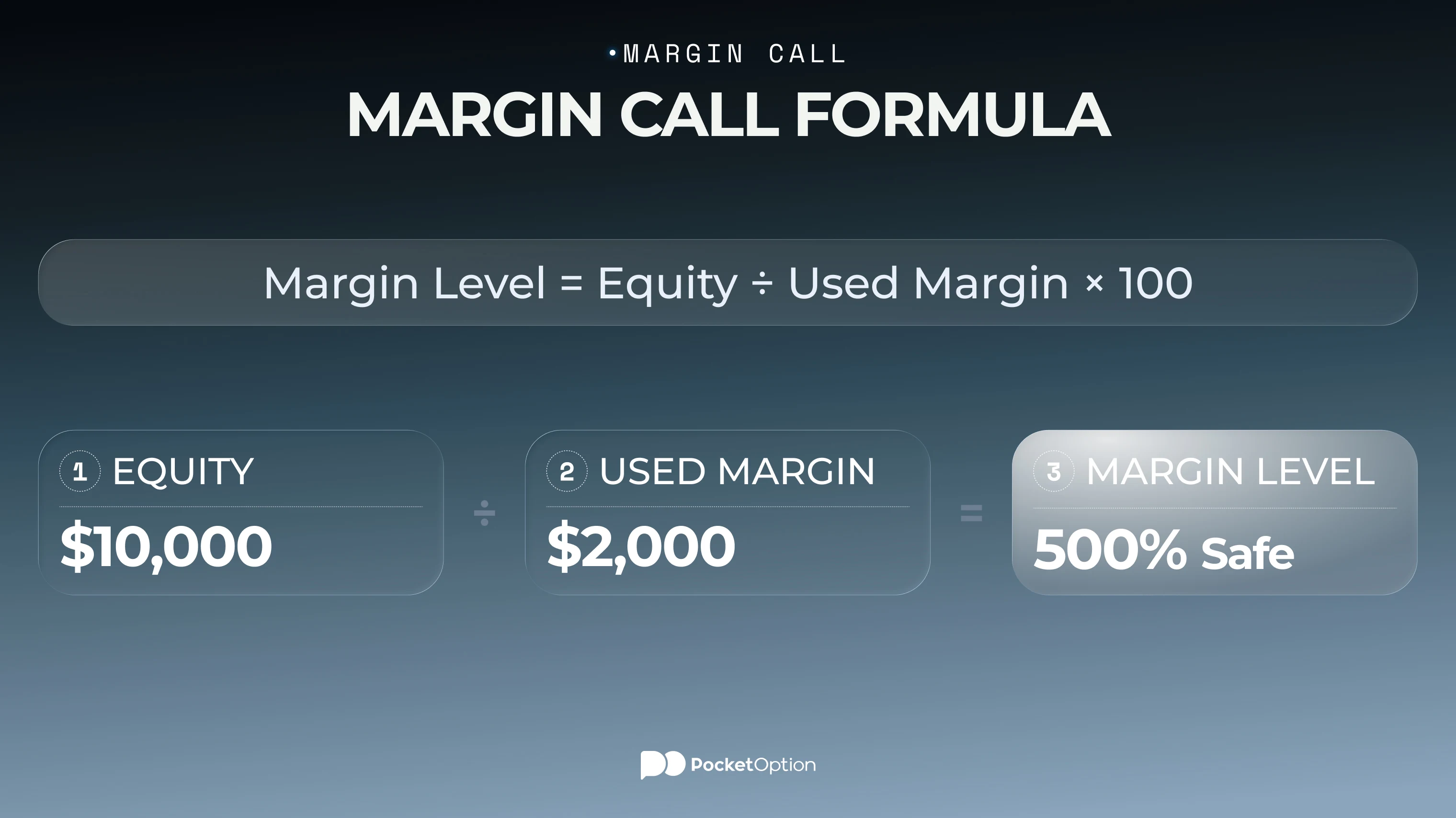
Here is the actual number your broker is running behind the scenes. Margin Level equals Equity divided by Used Margin, times 100. That is the whole thing. Equity is your balance adjusted for whatever your open trades are currently worth, up or down. Used margin is whatever chunk of your capital is locked up holding those trades open. Plug those two into the margin call price formula and out comes a single percentage. Every broker sets its own cutoff, usually somewhere between 50% and 100%, and dip below theirs and the warning fires.
Equity, Used Margin and Free Margin
Balance and equity sound like the same thing until you actually have a trade open. Balance is the number sitting there before anything moves. Equity is that same number, adjusted in real time for whatever your open positions are worth. Subtract used margin from equity and you get free margin, the part of your account you could still deploy or afford to lose. Every piece the margin call calculation formula needs lives inside those three numbers.
Term | What It Means |
|---|---|
Balance | Your account value with no open trades factored in |
Equity | Balance adjusted for open trades, updated in real time |
Used Margin | Capital tied up keeping your current positions open |
Free Margin | What's left after used margin comes out of equity |
Margin Call Formula Example for Forex Traders
Let us just run real numbers. Say your equity sits at 10,000 dollars, and 2,000 of that is tied up as used margin on open trades. Divide 10,000 by 2,000, multiply by 100, and margin level comes out to 500%. Plenty of breathing room. Now say the market turns on you. A losing streak drags equity down to 2,500, but used margin has not moved, still 2,000. Run that same formula for margin call again and the number falls to 125%. If your broker's cutoff sits at 100%, you are one more bad candle away from that notification.
Margin Call Price and Maintenance Margin
There is a flip side to this math, margin call price. Instead of asking what your margin level is right now, it asks a different question: at what price would margin level hit the broker's limit? Same relationship, solved backward. The margin call price formula maintenance margin rules are anchored to works the same way, running the numbers in reverse. Maintenance margin, from the broker's side, is simply the smallest amount of used margin it will let you carry per open position. Cross that line and you have arrived at your margin call price.
How Leverage Changes Margin Call Risk
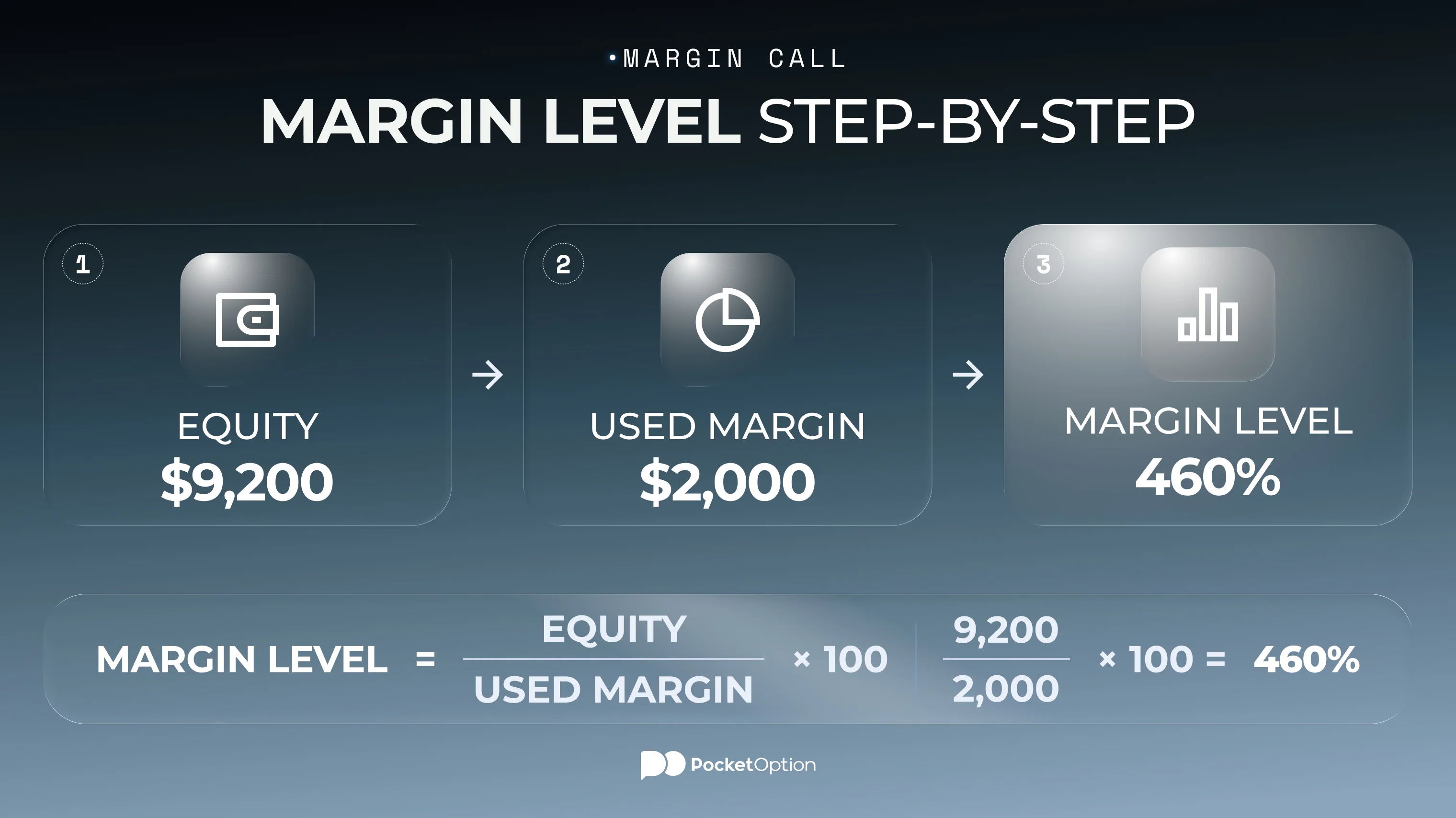
Leverage does not touch the math itself. It just changes how fast you arrive at the number. Go back to that 10,000 dollar account. With modest leverage, a bad move dents equity a little. Crank leverage way up on that same account, same starting capital, and the identical price move chews through equity so much faster that margin level can crater in a fraction of the time. Run the margin call price calculation formula at any point along the way and the story stays the same: bigger leverage means a smaller price move does more damage to your percentage.
How to Estimate Margin Call Risk Before Opening a Trade
You do not have to find any of this out the hard way. A handful of numbers, checked before you click buy or sell, tell you almost everything about how much room you are actually working with.
Position size relative to your account, not just the dollar figure that feels comfortable.
The actual leverage on this specific trade, not your account's maximum available.
Used margin the position eats up the moment it opens.
Free margin left over, your buffer against a move the wrong way.
The loss you're genuinely willing to take before you walk away.
Distance from entry to your stop loss, in price and in percentage terms.
What margin level would look like if price actually reached that stop, worked out ahead of time.
Margin Call vs Stop Out: What Is the Difference?
Margin call and stop out get used interchangeably, and they should not be. A margin call is just a warning. Your margin level dropped below what the broker wants to see, nothing has closed yet. Stop out is what happens if you ignore that warning, or just do not react fast enough. The broker steps in and starts closing positions on its own, usually the biggest loser first, once margin level falls even further. Think of margin call as the tap on the shoulder. Stop out is the broker walking you out the door.
What to Do If You Receive a Margin Call
So the notification hits. Now what? There is no universal right answer, and nothing below is a recommendation for your account specifically. You could add funds, lifting equity and pushing margin level back up. You could close part of a position, freeing up used margin right away. You could cut exposure altogether, trimming size or closing the weakest trades first. Which makes sense depends on your account, your broker's rules, and what you think the market does next.
Risks of Trading on Margin
Leverage is a double-edged thing by nature. The same setup that lets a small account control a bigger position also means losses pile up just as fast as gains could have. Equity can drop hard during a genuinely volatile session, faster than most beginners expect the first time it happens. Ignore a margin call long enough and it turns into a stop out, and brokers do not all handle that the same way, some close everything, some close just enough. None of this gets solved by being clever. The only real preparation is knowing your specific broker's margin call and stop out rules before you ever open a position, not after.
Risk Disclaimer: Trading involves significant risk of capital loss. This article is for educational purposes only and does not constitute financial advice. Always conduct independent research and consider your risk tolerance before making any trading decisions.
See more:Education