Blog
 Rudy ZayedBearish
Treasury Yield Curve Trading Strategies
In financial markets, not all indicators are created equal. But when it comes to anticipating macroeconomic shifts or gauging institutional sentiment, the Treasury yield curve holds a unique edge. It's not just a visual of bond yields — it's a living map of what traders, policymakers, and investors believe about the future of interest rates, inflation, and growth.
 Rudy ZayedBearish
Sentiment Analysis Using Social Media Data
In today's hyper-connected world, market sentiment no longer hides in economic reports or institutional filings — it spills live onto your social feed. Tweets, Reddit threads, news headlines, and influencer opinions can move markets in real time, sometimes even faster than traditional fundamentals.The rise of platforms like Twitter (X), Reddit (r/wallstreetbets), YouTube, and Telegram has democratized the flow of information. But with that democratization comes noise — and opportunity.
 Rudy ZayedBearish
Economic Calendar Trading with Event-Driven Strategies
In today's fast-moving financial markets, economic news is not just background noise — it's a direct trigger for price volatility, trend reversals, and volume surges. Traders who understand how to anticipate and respond to these scheduled events can generate consistent opportunities, especially in forex, indices, and commodities.
 Rudy ZayedBearish
Blockchain On-Chain Analysis for Crypto Trading
In the ever-evolving world of cryptocurrency, having an edge often means going beyond traditional price charts and indicators. On-chain analysis—a method of examining data directly from blockchain networks—has emerged as a powerful tool for understanding market behavior at a granular level. It offers traders insights into the actual usage, movement of assets, and behavioral patterns of participants that price action alone cannot reveal.
 Rudy ZayedBearish
Cross-Exchange Latency Arbitrage Strategies
In today’s algorithm-driven financial markets, microseconds often separate successful trades from missed opportunities. One of the most refined techniques taking advantage of this race against time is latency arbitrage — a method that uses small delays between exchanges to capture quick gains.
 Rudy ZayedBearish
Algorithmic Pattern Recognition Trading
In modern financial markets, where speed and efficiency often define success, algorithmic pattern recognition has emerged as a critical tool for traders aiming to automate decision-making. Instead of manually spotting chart formations like head and shoulders or triangles, traders now build algorithms capable of scanning thousands of instruments and timeframes in real-time to detect these patterns with precision.
 Rudy ZayedBearish
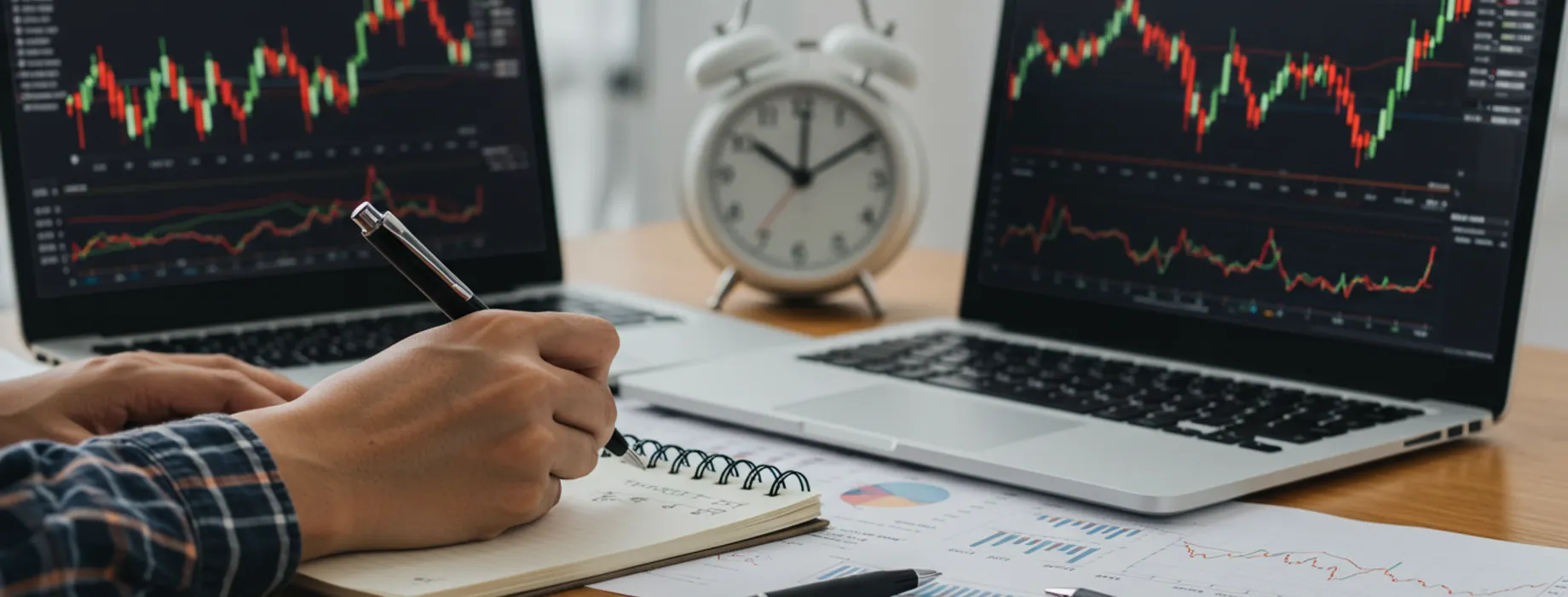
Commitment of Traders (COT) Report AnalysisIntroduction
In the world of trading, understanding market direction isn't just about price charts — it's also about knowing who's behind the move.The COT report analysis (Commitment of Traders) is a powerful tool that reveals how major players — from institutional hedgers to large speculators — are positioned in key futures markets. Published weekly by the U.S. Commodity Futures Trading Commission (CFTC), this data provides a rare peek into the flow of institutional sentiment.
 Rudy ZayedBearish
Gamma Exposure and Options Flow Impact on Spot Markets
Most traders watch charts. Some follow news. Few understand that the options market can silently steer the direction of spot prices — not through conspiracy, but via something called gamma exposure.Every time large volumes of options are opened around a strike price, market makers are forced to adjust — or hedge — their positions. This hedging isn't passive. It's mechanical, relentless, and often powerful enough to move the underlying asset itself.
 Rudy ZayedBearish
Tape Reading in Modern Electronic Markets
In a world dominated by algorithms, ultra-fast executions, and invisible market participants, one question keeps resurfacing:Does tape reading still work?The answer — yes, but not in the way your grandfather did it.Tape reading, once about squinting at paper tickers on a physical "tape," has evolved into a digital skillset for decoding the microstructure of electronic markets. Modern traders use tools like Level 2 data, Time & Sales, and real-time order flow to assess market intention — not just price.
 Rudy ZayedBearish
Footprint Charts and Volume Delta Analysis
In the world of modern trading, price is only half the story.What separates professionals from retail traders isn't just a better strategy — it's better data.Footprint charts and volume delta analysis provide that edge.They don't just show you where the market moved — they show how it moved, who was in control, and what happened inside each candle.While most traders focus solely on candlesticks or price action, institutional traders rely heavily on order flow tools like bid/ask imbalances, absorption zones, and cluster volume to make their decisions.
 Rudy ZayedBearish
Intermarket Analysis for Multi-Asset Trading
Markets are not isolated islands. They're part of a global system where capital constantly flows between assets — chasing yield, safety, or momentum.Understanding how these asset classes interact is the essence of intermarket analysis.This approach doesn't rely on single charts or isolated signals. Instead, it observes how stocks, bonds, commodities, and currencies respond to one another.Why? Because each market reflects a different side of macroeconomic behavior: risk, inflation, growth, or liquidity.
 Rudy ZayedBearish
Wyckoff Accumulation and Distribution Phases
The market is not a random walk — it's a carefully orchestrated auction of perception, liquidity, and timing.And the Wyckoff method remains one of the most powerful frameworks to decode that behavior.Developed in the early 20th century by Richard D. Wyckoff, this methodology wasn't designed for backtests or algos — it was built to mirror the intentions of smart money. Today, in a world dominated by HFTs, market makers, and whales, its principles are more relevant than ever.
 Rudy ZayedBearish
Smart Money Concepts: ICT Trading Methodology
Picture this: you're entering a breakout trade, it looks clean — and then price sharply reverses, hits your stop, and runs in the opposite direction.Coincidence?Not likely.Modern markets are not just shaped by news or technical patterns — they are engineered environments, driven by the actions of large players seeking efficiency and liquidity.
 Rudy ZayedBearish
Mental Models for Trading: Cognitive Frameworks for Decision Making
Most traders lose not because of poor strategy — but because of poor thinking.They jump into trades on instinct, exit in panic, and confuse randomness for signal. In reality, sustainable success in markets depends less on what you trade, and more on how you think.That's where trading mental models come in.
 Rudy ZayedBearish
Market Microstructure: Order Flow and Level 2 Data Analysis
Understanding market microstructure is no longer optional — it's a competitive necessity.In today's fragmented, high-frequency-driven markets, price alone tells you little. To truly understand where the market is going, you must observe how it moves — in real-time — by dissecting order flow, Level 2 data, and tape prints.Most traders stare at charts.
 Rudy ZayedBearish
Cryptocurrency DeFi Trading: Yield Farming and Liquidity Mining
DeFi trading isn't a trend — it's a paradigm shift. As centralized exchanges tighten KYC, and traditional platforms lose user trust, decentralized finance continues to thrive by offering traders full control, on-chain transparency, and access to yield opportunities beyond anything found in CeFi.

Tatiana OKBearish
Master Trading Like a Sports Champion with Pocket Option 100% Bonus
The world of trading shares many parallels with professional sports - both require strategy, timing, and mental focus to succeed. At Pocket Broker, we've designed our platform to help you perform at your peak, just like the elite athletes you admire. Ready to experience the winning feeling of a perfectly executed trade?

Tatiana OKBearish
Professional Analysis of Most Popular Moving Averages for Day Trading
Day trading is a fast-paced and potentially profitable activity that requires quick decision-making and effective tools. One of the most popular and versatile technical indicators used by day traders is the moving average

SignalBearish
How to Buy Carriage Services, Inc. (CSV) Shares - Investment in Carriage Services, Inc. (CSV) Stock
Thinking about investing in a company that literally never goes out of business? Carriage Services, Inc. (CSV) operates in the funeral services industry - a sector with guaranteed demand thanks to demographics and aging populations. With cremation rates soaring and strategic acquisitions driving growth, this might be your ticket to steady returns in uncertain times.
SignalBearish
How to Buy Beijing Media Corporation Limited (1000) Shares - Investment in Beijing Media Corporation Limited (1000) Stock
Thinking about investing in Chinese media stocks? Beijing Media Corporation Limited (1000) offers a fascinating case study of digital transformation meets traditional media. This Hong Kong-listed company is navigating the challenging advertising landscape while exploring new revenue streams. Let's explore whether this micro-cap stock deserves a spot in your portfolio.
SignalBearish
How to Buy Cencora, Inc. (COR) Shares - Investment in Cencora, Inc. (COR) Stock
Thinking about tapping into the massive pharmaceutical distribution market? Cencora, Inc. (ticker: COR) stands as a healthcare infrastructure giant that moves medications to millions daily. With roots dating back to 1871 and recent explosive growth, this company offers both stability and exciting potential. Let's explore why COR deserves your attention and how you can own a piece of this essential healthcare backbone.
SignalBearish
How to Buy Gladstone Commercial Corporation (GOOD) Shares - Investment in Gladstone Commercial Corporation (GOOD) Stock
Thinking about adding a piece of America's industrial backbone to your portfolio? Gladstone Commercial Corporation (GOOD) offers a unique opportunity to invest in the thriving industrial real estate sector while earning substantial dividends. This REIT has been quietly building an impressive portfolio of mission-critical properties across 27 states, making it an intriguing option for investors seeking both income and growth potential in today's dynamic market environment.
SignalBearish
How to Buy Universal Health Services, Inc. (UHS) Shares - Investment in Universal Health Services, Inc. (UHS) Stock
Thinking about investing in healthcare stability? Universal Health Services represents one of America's most established hospital networks with 45 years of consistent growth. As healthcare becomes increasingly essential, UHS offers exposure to both acute care and behavioral health services—two sectors with growing demand. Let's explore why this Fortune 500 company might deserve a spot in your portfolio.
SignalBearish
How to Buy UFP Industries, Inc. (UFPI) Shares - Investment in UFP Industries, Inc. (UFPI) Stock
Thinking about adding a piece of America's largest softwood lumber buyer to your portfolio? UFP Industries (UFPI) represents a unique opportunity in the building materials sector with 70 years of proven profitability and strategic diversification across construction, packaging, and retail markets. This isn't just another lumber company—it's a sophisticated manufacturer with 215 locations across nine countries and a track record of weathering economic cycles while delivering shareholder value. Let's break down why UFPI deserves your attention and exactly how to make this investment work for you.