
How to Declare Stocks and Pay Capital Gains Tax
Understanding how to declare stocks and manage capital gains tax is crucial for investors at any level. Whether you're an experienced trader or just beginning your journey in the markets, grasping your tax obligations helps you avoid costly errors and build a compliant, tax-efficient investment strategy.
Why It Matters
According to IRS statistics, thousands of taxpayers misreport investment income every year. This leads to audits, penalties, and lost profits. A major reason is confusion around when and how to declare stock-related income. This article provides a comprehensive guide to ensure you're well-prepared come tax time.
What Is Capital Gain?
A capital gain occurs when you sell a stock for more than you paid. For example, if you purchase a share for $1,000 and later sell it for $1,500, your capital gain is $500. Conversely, if you sell it for $800, you incur a capital loss of $200.
Short-Term vs Long-Term Capital Gains Tax
The U.S. tax system treats gains differently based on how long you hold an asset:
| Holding Period | Tax Category | Typical Rate |
|---|---|---|
| Less than 1 year | Short-term capital gains tax | 10% - 37% (ordinary income) |
| More than 1 year | Long-term capital gains | 0%, 15%, or 20% depending on income |
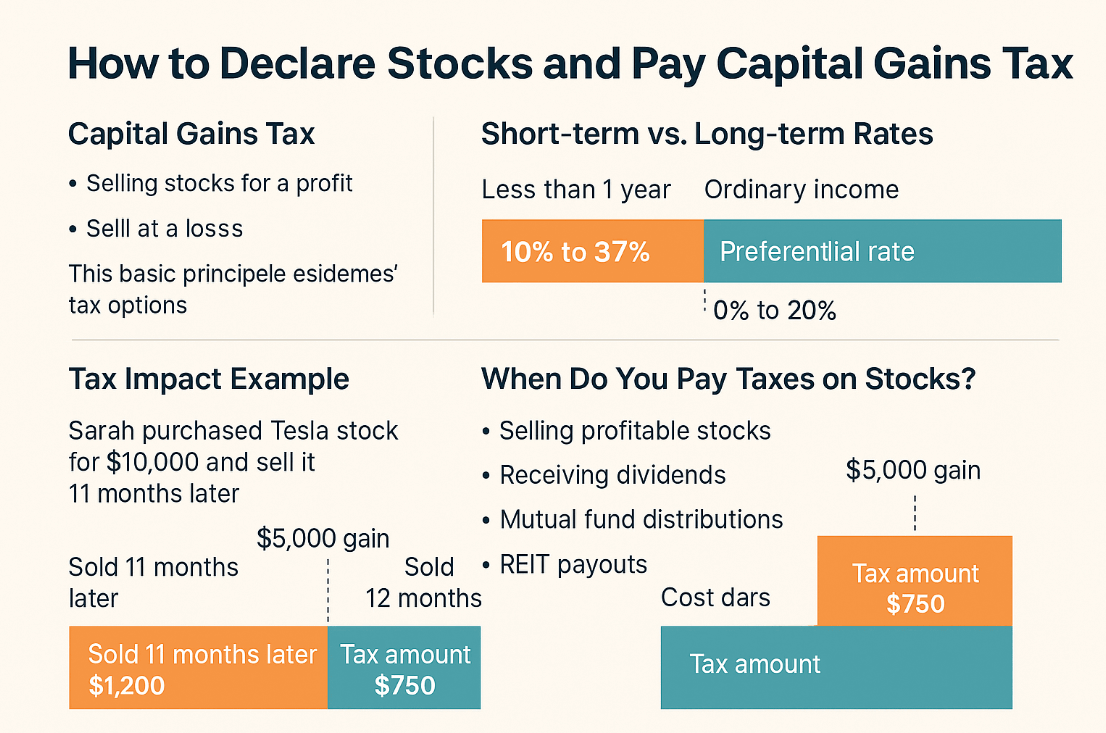
Example: Sarah bought Tesla stock for $10,000 and sold it 11 months later for $15,000. She made a $5,000 profit, which is subject to her 24% ordinary income rate. Her tax bill: $1,200. Had she waited one more month, her tax rate would’ve been 15%, or $750—a $450 difference.
When Do You Pay Taxes on Stocks?
When do you pay taxes on stocks? You pay taxes in the year the taxable event occurs:
- Selling for a profit: Tax applies in the year of sale
- Receiving dividends: Taxed annually as income
- Mutual fund distributions: Reported when distributed
- REIT payouts: Often taxed at income rates
Do I Pay Taxes on Stocks I Don't Sell?
Do I pay taxes on stocks I don't sell? Generally, no. The IRS uses a realization principle—you don’t pay capital gains tax until the asset is sold. However, dividend income from unsold stocks is still taxable annually.
Do You Pay Taxes on Investments If You Don't Sell?
The question "do you pay taxes on investments if you don't sell" follows the same logic. Unless the investment produces taxable income (like interest or dividends), no tax is due until realization.
Do I Have to Report Stocks on Taxes If I Made Less Than $1,000?
Absolutely. Do I have to report stocks on taxes if I made less than $1,000? Yes. The IRS requires all capital gains and losses to be reported, regardless of the amount. Even if your net gain is small or zero, you must declare it on Schedule D.
Does Selling Stock Count as Income?
Yes, but with nuance. Does selling stock count as income? It counts as capital gains income, which is taxed differently from wages or interest. Short-term gains are taxed as ordinary income, while long-term gains benefit from lower rates.
Do I Have to Pay Tax on Stocks If I Sell and Reinvest?
Do I have to pay tax on stocks if I sell and reinvest? Unfortunately, yes. Selling is a taxable event, regardless of what you do with the proceeds. The IRS taxes the sale itself, not how you use the money afterward.
Real Insight: Reinvesting doesn’t exempt you from capital gains tax. To avoid taxes, consider using tax-deferred accounts like IRAs.
How to Declare Stocks on Your Tax Return
Let’s walk through how to declare stocks step by step:
- Collect 1099-B and 1099-DIV forms from your broker
- Use Form 8949 to detail each stock sale
- Transfer totals to Schedule D for capital gains and losses
- Include dividends on Schedule B if necessary
- Attach all forms to Form 1040
Keeping accurate purchase and sale records is essential to properly report cost basis and holding periods.
Stock Tax Calculator: Your Best Friend
Using a stock tax calculator can help estimate your tax liability before selling. These tools account for:
- Holding period
- Income bracket
- Expected capital gain
- Offset from losses
Many brokers offer built-in calculators on their platforms.
Smart Tax-Saving Strategies
Here’s how experienced investors reduce their stock tax liability:
- Hold assets for over a year to qualify for lower tax rates
- Harvest tax losses by selling underperforming stocks
- Use tax-deferred accounts like Roth IRA or 401(k)
- Donate appreciated stock to charity for a deduction
- Time your trades to fall in lower income years
Common Tax Mistakes to Avoid
Avoid these pitfalls to stay on the IRS’s good side:
- Not reporting small gains or dividend income
- Incorrectly labeling short-term trades as long-term
- Forgetting about wash sale rules
- Relying solely on broker-provided summaries without checking them
When to Get Professional Help
Seek a tax advisor if you:
- Trade frequently or use multiple brokerages
- Have stock options or RSUs
- Invest internationally
- Need help with tax-loss harvesting
Alternative: Simplify with Pocket Option
Tired of managing complex tax forms? Pocket Option offers an alternative approach: Quick Trading, where you don’t own the asset but predict its price movement.
Why it’s simpler:
- No capital gains from asset ownership
- No dividend income to declare
- No need to calculate holding periods or cost basis
"Switching to prediction-based trading significantly simplified my tax season," says trader Anna Thompson. "I focus on market strategy instead of paperwork."

Final Thoughts
Whether you’re reporting a $100 gain or $100,000, managing stock taxes requires knowledge, discipline, and proper planning. From understanding how to declare stocks to knowing do I have to pay tax on stocks if I sell and reinvest, your success depends on compliance and strategy. Don’t overlook small transactions. Use a stock tax calculator, maintain accurate records, and consider professional advice if your trading grows in volume or complexity. And if you want to trade without the traditional tax burden, platforms like Pocket Option provide a simplified entry into market speculation. Just make sure the method you choose fits your financial and compliance goals. Discuss this and other topics in our community!
Always consult a tax professional or CPA before filing to ensure compliance with the latest IRS guidelines.
See more:Knowledge baseLearning