Commodity Currencies Explained: AUD, CAD and NZD
Tie a kite to a string and it generally follows wherever you tug, climbing when you pull, dipping when you let out slack. But the wind is doing plenty of the actual work too, and on a gusty day the kite can dive, twist, or climb almost independent of anything happening at your end of the string. A handful of currencies work something like that kite. Something else, a commodity price, pulls on the string. The wind, everything else moving in the economy, decides how much that pull actually matters on any given day.

Why Some Currencies Follow Commodities
A commodity currency belongs to a country whose economy leans heavily on exporting raw materials or agricultural goods rather than, say, finished manufactured products or financial services. When the world pays more for what that country sells, oil, gold, wheat, dairy, whatever the export happens to be, more money tends to flow into that economy, and the currency often reflects some of that shift. When prices for those same exports fall, the opposite pressure can show up.
None of this makes a commodity currency move in lockstep with a single price chart. A commodity currency still answers to interest rates, inflation, and everything else that moves any other currency. The commodity link is real, but it is one input among several, not the whole story.
Open a free demo account and watch how a commodity-linked pair trades in real time, using virtual funds.
Try Demo AccountCurious how a currency like this actually behaves once commodity prices start moving on a live chart? Reading about the link only goes so far. Watching a currency react, or fail to react, to a real commodity move teaches the relationship faster than any explanation can.
Open a demo trading account and watch how a pair like this trades in real time, with virtual funds and nothing real on the line.
AUD, CAD and NZD: The Main Examples
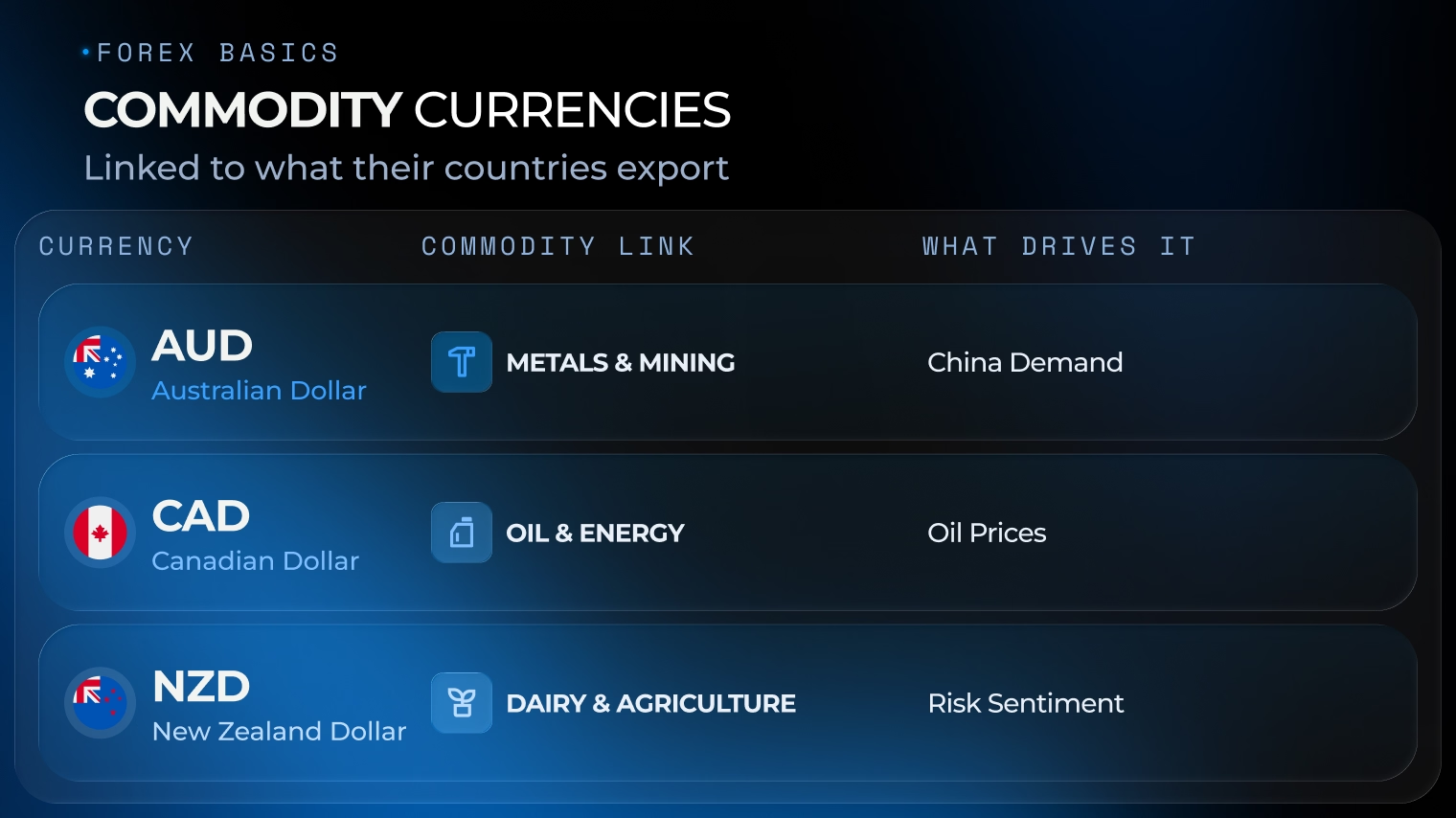
Three currencies get labeled commodity currencies more often than any others in forex conversation. The Australian dollar ties to metals and mining exports, with China as the dominant buyer on the other end of most of those shipments. The Canadian dollar ties to oil and broader energy exports. The New Zealand dollar ties to agricultural exports, dairy chief among them.
Each of these commodity currencies earned the label the same way, through a large enough share of national exports concentrated in a handful of raw goods that price swings in those goods genuinely register at the level of the whole economy. Seeing how differently each one actually behaves takes more than a definition, and the pocket option tutorial covers chart basics first if that side of things still feels new.
Why the Australian Dollar Reacts to Metals and China
Answering what is commodity currency behavior for AUD specifically usually starts with China. Australia ships enormous volumes of iron ore and other industrial metals there, so Chinese demand, and by extension Chinese economic data, tends to matter as much to AUD as the metals prices themselves. Strong Chinese manufacturing data can lift sentiment around the Australian dollar even without a fresh move in metals prices. That link is real but indirect enough that it rarely moves in a perfectly straight line.
Why the Canadian Dollar Is Linked to Oil
Oil plays a similar role for the Canadian dollar that metals play for Australia's, and the comparison to whether is aud a commodity currency for the same underlying reason is a fair one, since both economies lean on a dominant export. Canada exports substantial volumes of crude oil and other energy products, so rising oil prices tend to support CAD sentiment, and falling prices tend to weigh on it. Interest rates, broader economic data, and the US dollar's own strength or weakness all still factor in alongside oil, sometimes overpowering it entirely for a stretch.
Why the New Zealand Dollar Tracks Dairy and Risk Sentiment
New Zealand's export mix leans agricultural, dairy products especially, which gives NZD a different flavor of the same underlying pattern seen when asking is canadian dollar a commodity currency for reasons tied to oil instead of milk. Dairy prices matter, but so does the world's general appetite for risk. NZD tends to get grouped with currencies that gain when investors feel confident and lose when they get nervous, sometimes regardless of what dairy prices are doing that particular week.
Commodity Prices Are Only One Part of the Picture
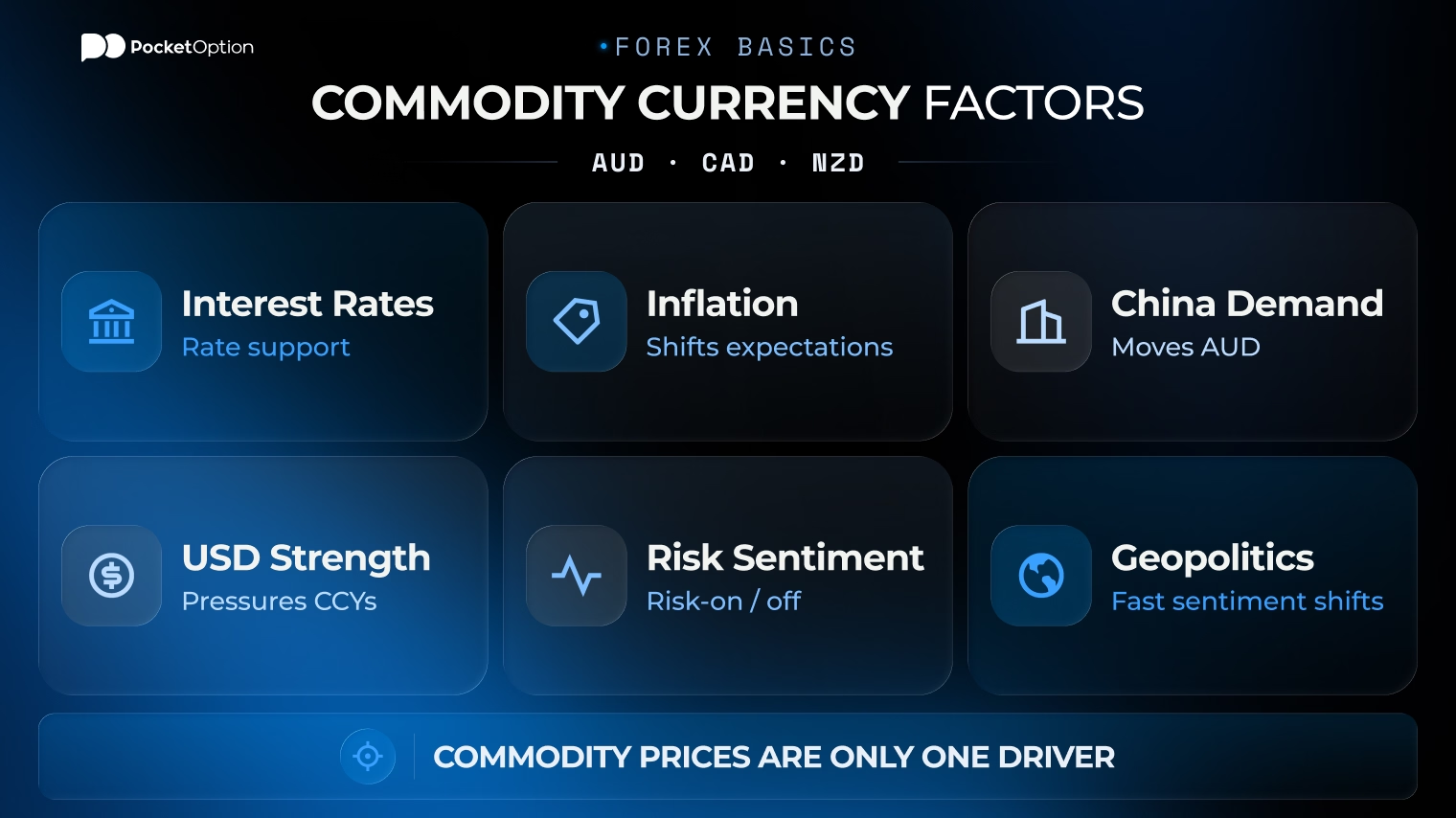
Currencies do not move on commodity prices alone, and asking is nzd a commodity currency or the same question about AUD or CAD only answers part of what actually drives these exchange rates day to day. Interest rates set by each country's central bank matter enormously. Inflation data shifts expectations. Trade balances, broader China demand beyond just one commodity, the US dollar's own strength, global risk appetite, and geopolitical headlines all pull in their own directions too, sometimes with the commodity link, sometimes against it.
Factor | Description | Possible Impact |
|---|---|---|
Interest Rates | Central bank policy on borrowing costs | Higher rates can support a currency independent of commodities |
Inflation | Rising or falling prices domestically | Shapes expectations for future rate decisions |
China Demand | Broader appetite from a major trading partner | Can move AUD and others beyond a single commodity price |
USD Strength | The US dollar's own trend | A strong dollar can weigh on commodity currencies regardless of exports |
Risk Sentiment | Global appetite for risk-on or risk-off positioning | Can override commodity price direction entirely |
Geopolitical News | Unexpected political or conflict-driven events | Can shift sentiment fast, independent of any export data |
How Risk Sentiment Changes the Relationship
This whole group tends to get treated as risk-sensitive almost as a category. When investors feel confident about global growth, these currencies often catch a bid alongside that optimism. When fear rises, a banking scare, a geopolitical shock, these same currencies often get sold regardless of what commodity prices happen to be doing that day. The relationship runs both ways, and reading only the commodity side of the story misses half of what is actually moving the exchange rate.
Commodity Currency vs Commodity-Backed Currency
These two terms sound alike and mean something different. This article's meaning throughout refers to the currency of a country whose economy leans on exporting raw materials. A commodity-backed currency is something else entirely, a currency historically or officially tied to a fixed amount of a physical commodity, gold-backed currencies being the classic example. This article is about the first meaning only.
How Traders Use This Context in Forex Analysis
Traders who track this context tend to watch a handful of the same inputs. Prices of the relevant export commodity itself. Export and trade data for the country in question. Central bank policy and rate decisions. The US dollar index, since so much of forex ultimately measures against the dollar. General risk sentiment and the broader news backdrop. None of this adds up to a ready buy or sell signal on its own. It is context that shapes how a currency might respond to other developments, not a standalone reason to trade.
Common Mistakes When Reading Commodity Links
A handful of habits turn this useful context into a misleading one.
Assuming oil always moves CAD by the same amount, regardless of the broader market backdrop.
Tying AUD exclusively to gold while ignoring the far larger role of industrial metals and China.
Ignoring the US dollar, interest rates, and risk sentiment entirely and focusing only on the commodity itself.
Treating a single commodity price move as a ready trading signal on its own.
Confusing a commodity currency with a commodity-backed currency, two genuinely different concepts.
Risks Before Trading Commodity Currencies
The link between a currency and its associated commodity prices can weaken for stretches with no clear warning, sometimes for months at a time. News unrelated to commodities at all can shift sentiment faster than any export data. Central bank decisions can override the commodity story completely, at least in the short term. The US dollar's own trend can dominate a pair regardless of what oil, gold, or dairy prices are doing. And leverage magnifies losses on any trade built around a relationship that turns out weaker than assumed.
Risk Disclaimer: Trading involves significant risk of capital loss. This article is for educational purposes only and does not constitute financial advice. Always conduct independent research and consider your risk tolerance before making any trading decisions.
See more:Education